
Living With MS

MS Heat Sensitivity: When Heat Changes Your Whole Day
Dr. Patti Bevilacqua explains how heat can change a day with MS, and how small adjustments help her keep doing what matters.


Dr. Patti Bevilacqua explains how heat can change a day with MS, and how small adjustments help her keep doing what matters.

Walking used to be something I never had to think about. I walked across a room because I wanted to get somewhere. I climbed stairs, crossed gym floors, moved through crowds, and rarely gave any thought to what my feet were doing. As a physical education teacher, movement was part of my everyday life. I didn’t have to think about how to walk, turn, or change direction. My body simply did what I asked it to do. Then MS changed that. There are times now when walking requires my full attention. Where am I putting my foot? Is the ground even? Am I moving too quickly? Is there something nearby I can hold onto if I need it? I never imagined there would come a time when something so ordinary would require so much thought. And I don’t think people always understand what that feels like. When Walking Stops Being Automatic Think about how often you walk without paying attention to the actual process. You might be talking to someone, thinking about what you’re making for dinner, or looking for something in another room. Your feet are moving, but your mind is occupied with something else. That’s how walking used to be for me. Now, there are times when I have to concentrate on the very thing I once took for granted. I notice uneven ground and pay attention to where I’m stepping. I think about how I’m going to turn or whether I can safely manage a particular surface. Sometimes I find myself looking for something to hold onto before I even start moving. It’s strange to realize that your relationship with something as familiar as walking can change so dramatically. The distance across a room hasn’t changed. The floor may be exactly the same as it was yesterday. But the effort required to get from one side to the other can be very different. That’s one of the frustrating things about MS. Something that was manageable yesterday may require considerably more effort today. And I don’t always know why. Why MS Can Affect Balance Balance is more complicated than most of us realize. Our brains rely on information from our eyes, inner ears, muscles, joints, and sensory nerves to help us understand where our bodies are and how to stay upright. MS can interfere with the communication involved in that process. Changes in sensation can make it difficult to know exactly where your feet are. Weakness, stiffness, or coordination difficulties can affect how you move. Vision problems and fatigue can make maintaining balance even more challenging. Not everyone with MS experiences balance problems, and those who do may experience them differently. For some people, the difficulty may be occasional unsteadiness. For others, it can affect walking, turning, standing, or moving through unfamiliar environments. It’s also important to remember that not every balance problem is caused by MS. Inner ear conditions, medication effects, and other health problems can affect balance too. New or worsening balance difficulties should be discussed promptly with a healthcare professional rather than automatically attributed to MS. Sudden, severe balance problems, particularly when accompanied by other new neurological symptoms, require emergency medical assessment. Understanding why balance can be affected doesn’t necessarily make the experience any less frustrating. Knowing what’s happening in my nervous system doesn’t change the fact that I sometimes have to think about every step. When Your Confidence Changes Along With Your Balance There’s another side to balance problems that doesn’t get nearly enough attention. Confidence. When you’ve stumbled, fallen, or suddenly felt unsteady, you remember it. The next time you encounter a similar situation, you may approach it differently. You might slow down, look for something to hold onto, or decide that a particular route isn’t worth the risk. That isn’t necessarily fear taking over. Sometimes it’s experience telling you to pay attention. But there’s an emotional cost to that caution. A staircase you’ve climbed hundreds of times can suddenly seem more challenging. A crowded room can become something you have to navigate carefully. An unfamiliar building may have you looking for chairs, handrails, or an easier way to get where you’re going. The building hasn’t changed. Your confidence in moving through it has. For someone who spent years teaching physical education, coaching, and encouraging others to move, that change can be particularly difficult to accept. I was accustomed to trusting my body. I didn’t fully appreciate how much freedom there was in that trust until it began to change. And although I understand why I need to be more cautious, that doesn’t mean I always like it. Sometimes I just miss being able to move without thinking about what might happen next. The Mental Effort Nobody Sees Most people understand that walking can become physically difficult when someone has MS. What they may not recognize is how much concentration it can require. A simple walk can involve a series of decisions. Where should I step? Is there something in my way? Should I slow down? Can I turn safely? Do I need to take another route? Instead of enjoying a conversation while walking, I may need to concentrate on where I’m going. Instead of looking around and taking in my surroundings, I may be paying attention to the ground beneath my feet. And when fatigue enters the picture, the whole process can become even more demanding. That’s something I wish people understood. Sometimes I’m not moving slowly because I’m taking my time. I’m moving slowly because I’m concentrating. Sometimes I’m not reaching for a railing because I’m frightened. I’m reaching for it because I know what helps me feel steady. And sometimes I need to sit down because I’ve used more energy than anyone watching would ever imagine. None of that is particularly obvious from the outside. Accepting Help Without Feeling Defeated There can be a lot of emotion attached to using a walking aid. For someone who has always valued independence, the idea of needing a cane, walker, or another
Dr. Patti Bevilacqua shares what MS taught her about energy, workplace adjustments, and finding value beyond a career.
Sleeping for hours and still waking exhausted is common with MS. Dr. Patti Bevilacqua explores why rest isn’t always restful and when to look deeper.

Patti reflects on the conversations she wishes she’d had after her MS diagnosis, from fear and identity to support, boundaries, and asking for help.

Patti reflects on what MS took from her, what she rebuilt, and how multiple sclerosis reshaped her identity, independence and choices.

Patti reflects on why asking for help with MS felt so difficult and how she learned to rethink independence, energy, and support.
A personal look at invisible MS symptoms, including fatigue, brain fog and numbness, and the unseen effort behind an ordinary day.
MS numbness can be hard to explain. Discover a simple way to describe this invisible symptom and help others understand its daily impact.

Explore thoughtful and practical gifts for someone with MS, including comfort items, helpful services, audiobooks, personal notes, and an encouraging book based on lived experience.
Staying positive with MS is not about pretending everything is fine. It is about finding small, honest reasons to keep going on difficult days.
MS relapse triggers are not always obvious. Knowing the 7 warning signs can help you respond faster and protect your health when living with multiple sclerosis.

MS brain fog can affect memory, focus, and word-finding. Learn common triggers, practical coping tips, and when to seek help safely.
The best books for living with MS do more than explain the condition. They offer comfort, practical guidance, and hope on the hardest days.

Common MS misconceptions do real damage. This post separates fact from fiction and shares what living with MS actually looks like.

How MS affects daily life goes beyond symptoms. This post explores how relationships shift after a diagnosis and what it takes to navigate it together.
The question after diagnosis is not who am I now. It is what is still possible. This post explores finding purpose with MS.
MS fatigue is neurological and invisible. These MS fatigue management tips help you protect your energy and keep showing up for life.
Explore practical self-care tips for MS, including fatigue management, energy protection, stress support, and daily life strategies.
Learn what multiple sclerosis is, how it affects the body, common symptoms, types of MS, and what life after diagnosis may look like.
A real life with MS journey showing how unexpected changes can lead to growth and purpose.

Explore Patti Bevilacqua’s MS memoir about identity, resilience, and rebuilding confidence after a multiple sclerosis diagnosis.
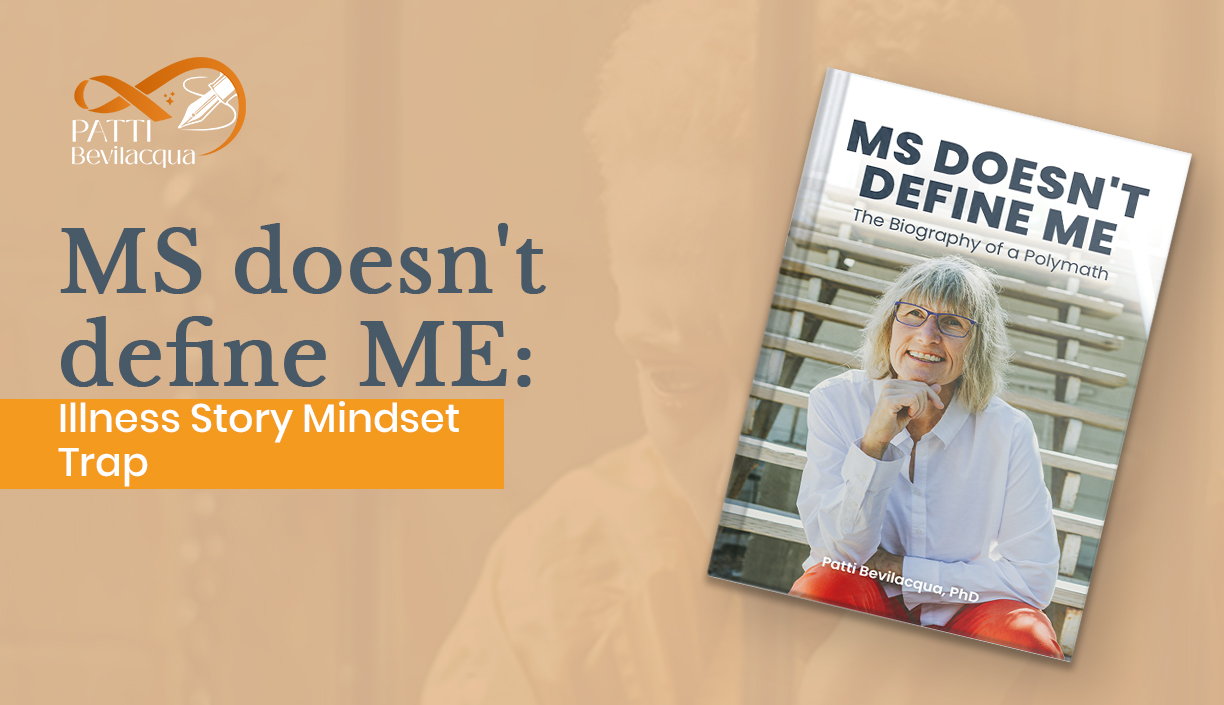
Learn how chronic illness can shape identity, recognize the illness story mindset, and explore practical steps to rebuild confidence.
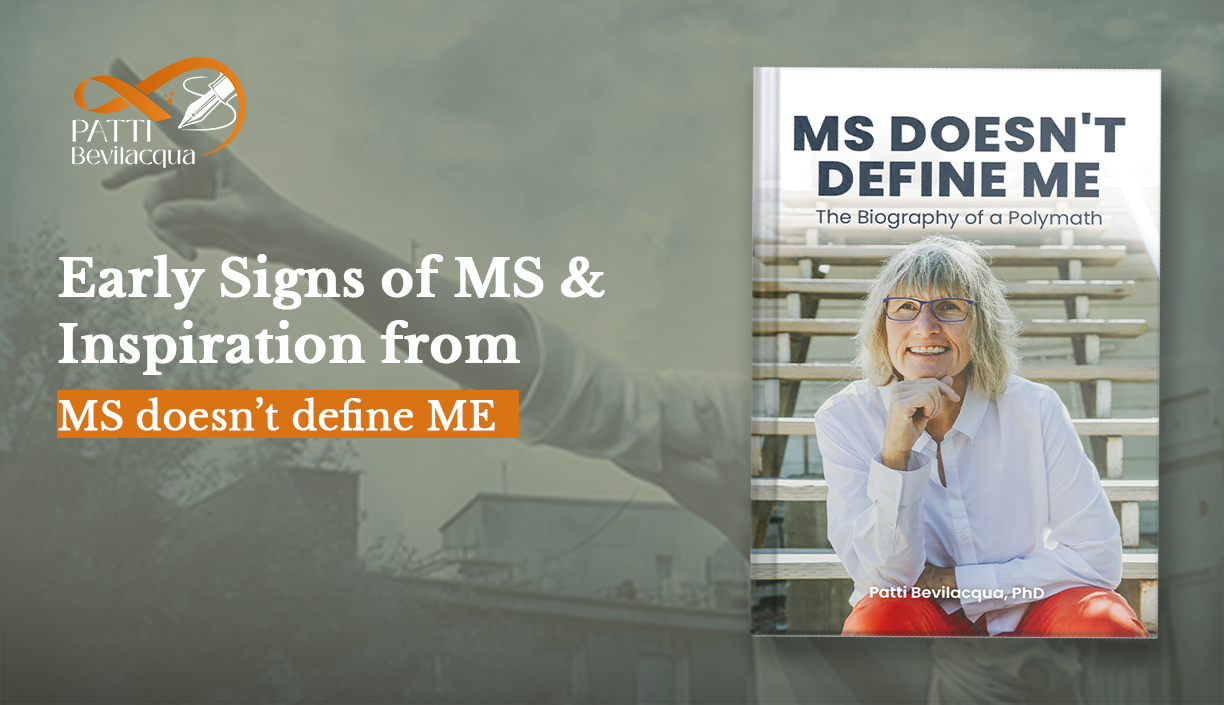
Learn to recognize early MS symptoms and gain motivation from Patti Bevilacqua’s “MS doesn’t define ME” to live fully and confidently.
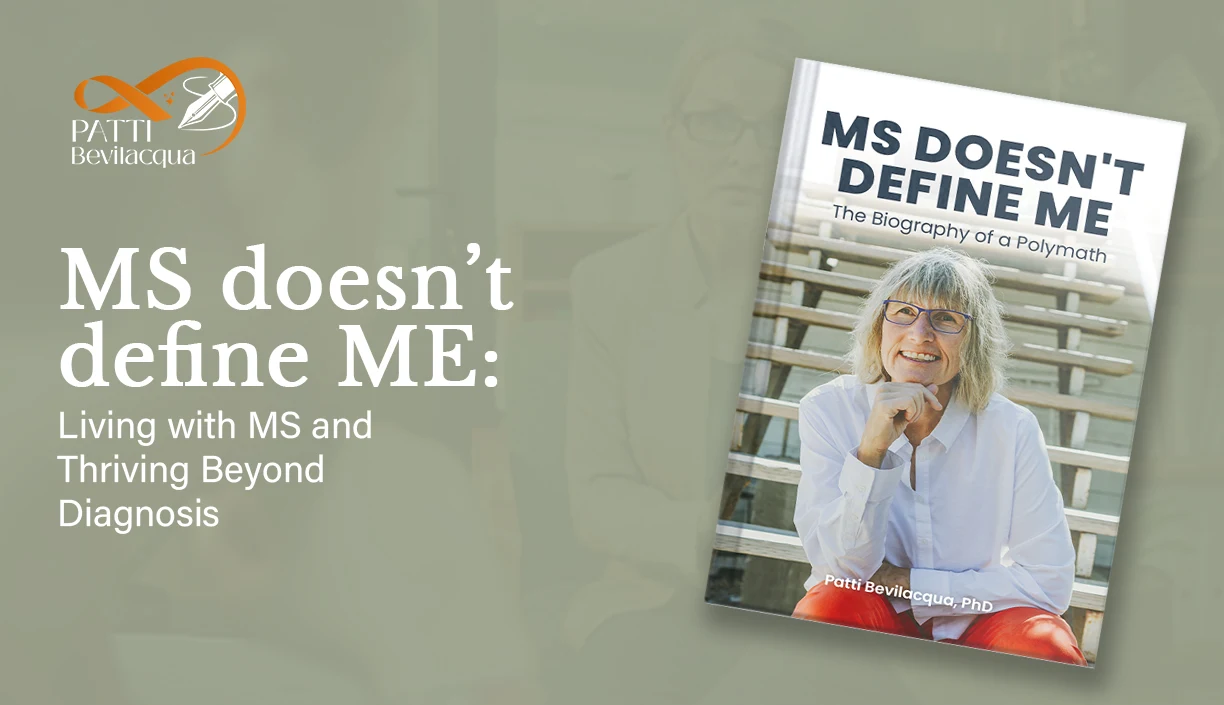
MS doesn’t define ME: Patti Bevilacqua shows how to live fully and thrive with MS.

Patti’s MS journey shows that belief and mindset fuel resilience, your story defines your strength, not a diagnosis.
A quiet realization after an MS diagnosis that life wasn’t broken, only changed, and learning to move forward with self-acceptance.

Explore Patti Bevilacqua, PhD’s journey with MS, resilience, optimism, and identity, plus insights from her book and newsletter.
Discover how Patti Bevilacqua navigated life with multiple sclerosis, built resilience, and inspires others through her story and advocacy.
Discover how Patti Bevilacqua embraces life with MS by listening to her body and finding grace in every day.

Life changes can arrive quietly. This series explores slowing down, redefining strength, and remembering you are still whole, even when everything feels different.

Patti Bevilacqua turns her MS diagnosis into a story of hope, strength, and life redefined.

Patti Bevilacqua turns grief into growth, inspiring resilience and hope for those living with MS.

A moving reflection on Patti Bevilacqua’s early MS journey, uncertainty, identity loss, and the quiet strength to begin again.

Dr. Patti Bevilacqua prepares for Grand Slam Finals 2025, sharing a powerful story of resilience, purpose, and empowerment.

Dr. Patti Bevilacqua’s upcoming book shares resilience, self-advocacy, and hope for those living with MS and hidden illnesses.

Go behind the scenes of Patti Bevilacqua’s Speaker Slam® performance and discover how MS inspired her message, “Take the Pen!”

When MS threatened her career in 1990, Dr. Patti Bevilacqua began a powerful journey of resilience, purpose, and transformation.