Growing up in a small town in Canada, I played sports all through high school and had an amazing physical education teacher who was so inspiring that I decided to become one myself. In 1989, Patti started her dream job at a high school in Pitt Meadows, British Columbia. working at a high school in Pitt Meadows, British Columbia. Patti felt ready to tackle anything in her path. She had an exciting life ahead and felt she had gotten an early start.
Then, one January morning in 1990, when I was still 22, I woke up with double vision.
At 22, Patti experienced sudden double vision, a sign that something serious was happening. There was a strange, blurry quality I’d never experienced before, and my heart raced. That single symptom became the start to a series of changes that toppled the sense of surety I’d spent my entire life building. I was a high achiever and had one plan, to teach phys ed until I retired, but I soon found out that life doesn’t always let you drive. Sometimes, it tosses you into the passenger seat and hits the gas.
A Life-Altering Diagnosis
When the double vision didn’t resolve, I went to see an ophthalmologist and was sent for an MRI, as well as other tests, scans, and eye exams. At every appointment, I hoped the doctor would say it was a minor glitch and I just needed some eye drops or a quick procedure. Instead, I was diagnosed with relapsing remitting multiple sclerosis (which was re-diagnosed as secondary progressive MS 12 years later).
That hit me like a brick. I associated MS with wheelchairs and severe disability because that’s all I’d seen on TV shows about the condition. Suddenly, my vision issue wasn’t a standalone problem, it was a symptom of something bigger and scarier. I knew immediately that my old strategies of just pushing through discomfort as an athlete wouldn’t cut it this time. I couldn’t outsmart my body’s newfound rebellion. Before this, I hadn’t faced any physical challenges, I was healthy, active, and loving my life.
The emotion that overshadowed all others was helplessness; it felt like I was stumbling in the dark. There were many days where I felt insecure about my future and like nobody understood what I was going through because physically I still looked the same to the outside world. But inside, I was battling a new sense of vulnerability. At the time of my diagnosis, I wasn’t offered any treatments, in part because the options back then were much more limited, but also because my physical symptoms were still minor, even though the mental health effects were notable.
More than 35 years since my diagnosis, at age 57, I can see that MS set me on a path of questioning, learning, and eventually discovering a resilience I didn’t know I possessed. But it took a long time to get to that point.
Learning to Pivot
Before MS, I felt unstoppable. I was the teacher who’d challenge students to push harder and believe in themselves, to laugh in the face of fatigue. But nearly five years after my initial diagnosis, my MS symptoms grew more intense, and my body felt like it was on fire.
What had been my dream job had grown increasingly difficult, to the point where I could no longer continue with it, as challenges with fatigue and balance proved too challenging and I decided to quit.
My partner, Paul, and I decided it would be best for me to return to my hometown so my parents could help care for me. A heaviness settled in, a loss of hope, a numbness that seeped into every corner of my spirit. My body felt foreign, arms too heavy to lift, legs aching with fatigue.
As anyone with MS knows, the disease comes with a whole bag of tricks. The physical symptoms were crushing enough, but the greatest blow was how it wreaked havoc on my mental state. I felt like a burden to my parents, and I was definitely going through the stages of grief.
Then, the principal at a different school in the same school district where I’d taught phys ed called, saying they needed a social studies teacher. Although I worried about having enough energy to be in a classroom every day, there was a flicker of excitement. Maybe this could be my new path forward?
While I missed the gym every single day, I gave my students everything I had. I began to learn how to disentangle myself from the plans I once refused to abandon. Letting go in that way is terrifying, but sometimes, it’s the only way to make space for what’s next.
I only taught social studies for another four years, but the experience ultimately inspired me to return to school and pursue my Ph.D. at the University of Toronto in 2001. I believed that even if I could no longer teach physical education myself, I could still support and guide others on that path. During my Ph.D. program, I gave a presentation about losing my identity as a physical education teacher, and in the middle of speaking, I was overcome by an intense wave of emotion and broke down in tears. Instead of discomfort or judgment, my professor and classmates gathered around me with empathy, not pity, and that moment became another turning point in my life. Allowing myself to feel those emotions helped me realize that I had been clinging to what MS had taken from me, rather than staying open to what might still be possible. Maybe something better was waiting for me, but I couldn’t see it because I was holding too tightly to who I once was. Most importantly, I began to understand that I wasn’t alone.
Making Connections
After earning my Ph.D., I taught for one year at Ithaca College in New York while applying for full-time positions at other colleges and universities. Despite my experience and credentials, I faced repeated rejections. Over time, I began to realize that I didn’t need a traditional classroom to share my passion or live my purpose. In 2021, I started a Facebook community called “MS Stands for Mindset Shift,” followed by an online newsletter, “Seeing Differently,” in 2024. Through both platforms, I share lived experiences, insights, and practical strategies for living well with a hidden illness or invisible challenge.
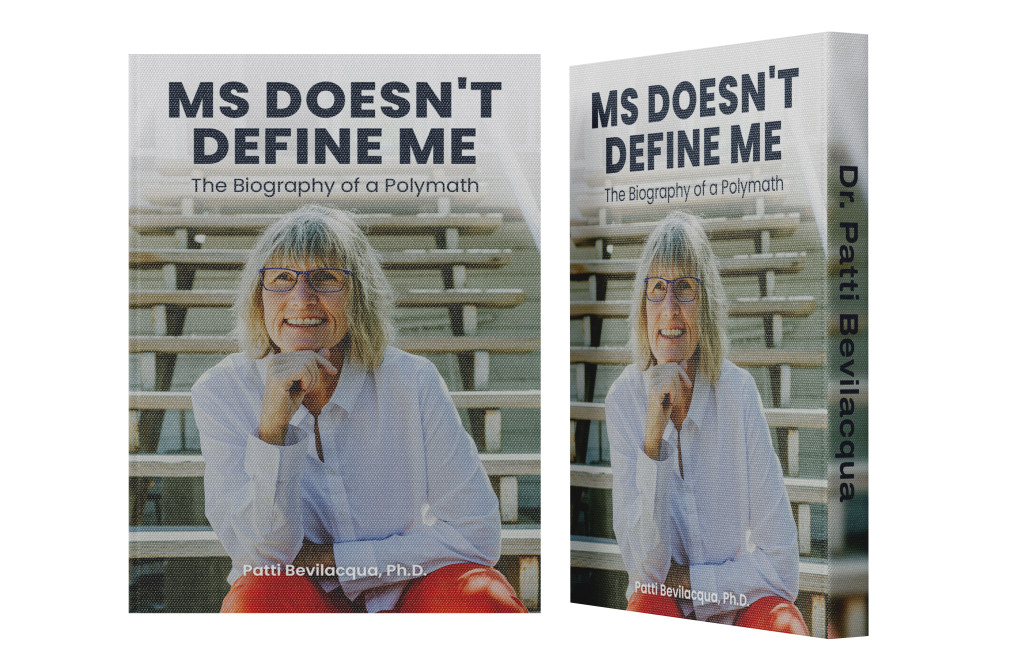
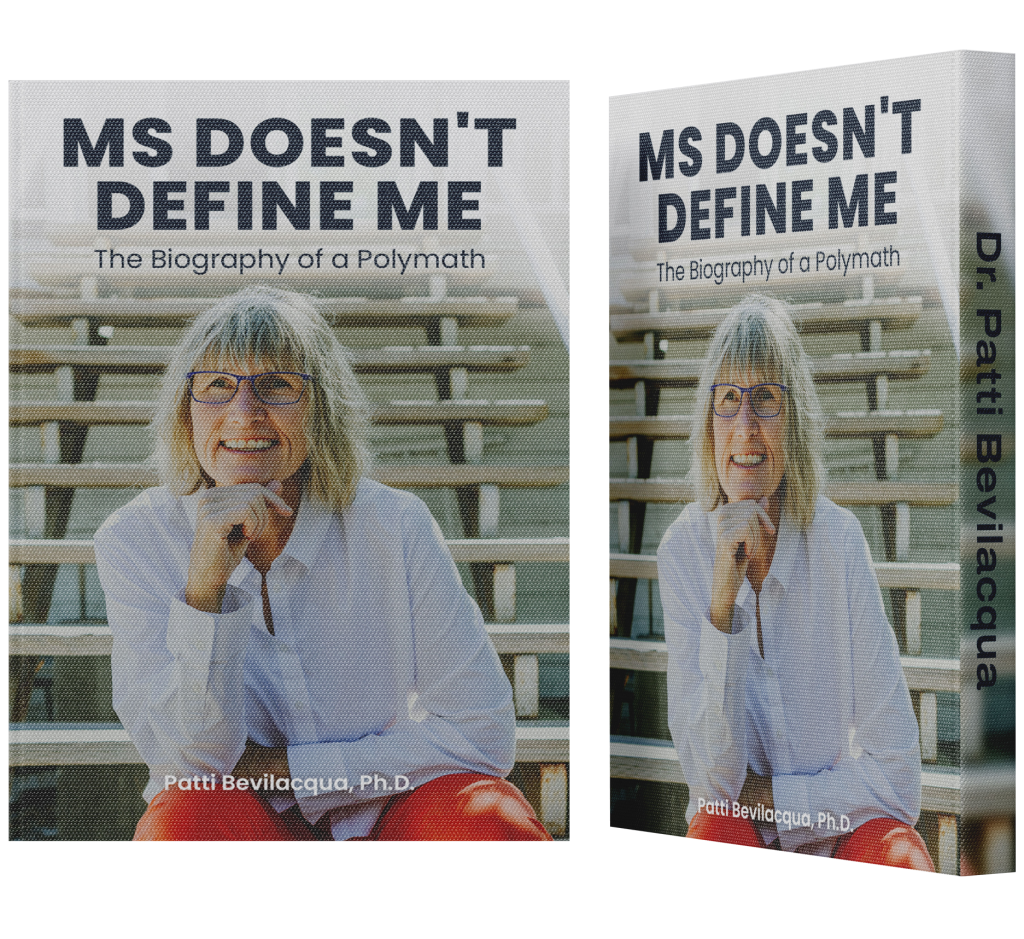
Those writings turned into a printed memoir, MS Doesn’t Define ME: The Biography of a Polymath, which was published in 2025. I also started going on podcasts to talk about living with MS, and delivered a TEDx talk in 2023 about hidden illness and resilience. Today, much of my focus is as a speaker and workshop facilitator through my company (fearLESS with MS). I address a variety of groups, including speaking to those who are dealing with “invisible” challenges related to health beyond MS, as well as with family, employment, and financial struggles. I also talk to college students about how to be more adaptable and resilient.
My symptoms haven’t significantly worsened: I still have double vision in my right eye (a prism in the lens of my glasses helps me to see more clearly), and I walk with a limp. I find myself falling two to three times a week, but luckily, no broken bones! I walk every day, sometimes just for 20 minutes, other times for an hour, but I do it every single day, with walking poles. I can still drive, but I can’t run anymore.
Some of my ideas about building resilience and shifting my mindset around MS apply to other situations, because it’s truly about owning your story and understanding how you deal with unpredictability. Being unsure of what’s going to happen next, even from day to day, is the hallmark of MS, and navigating that is important. I talk about living unapologetically, and how that hasn’t been easy to achieve. There have been days I wanted to quit doing anything and just do jigsaw puzzles instead. But that’s not how you develop a sense of purpose.
The underlying message in my speeches, my writing, and my conversations is that challenges are not roadblocks; they may be detours to unseen opportunities. Every experience I have to communicate and connect may come with taxing my energy, but they also fill me with passion and meaning. I’m grateful every morning to MS for continuing to help me show up and teach in new ways.
Source Note: Adapted from an interview originally published on HealthCentral: MS Changed the Way This Author Lived Her Story